Why diets stop working
Why Do Diets Stop Working? Hypnotherapy for Weight Loss Plateaus in Ontario
TL;DR: A weight loss plateau is rarely just a calorie problem. For many people in Ontario, the real block is subconscious: the nervous system protects a weight setpoint tied to safety, identity, or old emotional patterns, and no amount of restriction moves it. Hypnotherapy works at this subconscious level, and a meta-analysis of 18 studies found that adding hypnosis to a weight loss programme nearly doubled results compared to behaviour change alone.
Quick Answer
Hypnotherapy for weight loss plateaus is a subconscious-focused approach that addresses the psychological and identity-level barriers that keep the body stuck at a particular weight, even when diet and exercise are being followed consistently. A meta-analysis of 18 studies published in the Journal of Consulting and Clinical Psychology found that participants receiving hypnotherapy alongside a behavioural programme lost an average of 11.83 lbs compared to 6.00 lbs in the non-hypnosis group, with the advantage of hypnosis increasing at follow-up rather than fading. Fanis Makrigiannis, a Certified Hypnotherapist and NLP Master Practitioner at Mind Spirit Body Hypnosis in Oshawa, Ontario, offers virtual weight loss hypnotherapy sessions for clients across Ontario who have been doing everything right and still cannot move the scale.
Questions This Article Answers
Why do I stop losing weight even when I am eating well and exercising?
Is a weight loss plateau a physical problem or a mindset problem?
What does the subconscious have to do with staying stuck at a certain weight?
Does hypnotherapy actually work for breaking through a weight loss plateau?
What happens in a weight loss hypnotherapy session at Mind Spirit Body Hypnosis?
In this article:
In my practice, the clients who arrive for weight loss work are rarely people who have not tried. They have tried. They have tracked, restricted, exercised, hired coaches, read the books. And at some point, the scale stopped moving. The deficit is still there. The effort is still there. But the result has stopped arriving.
This pattern is more common than most people know, and it is more interesting than "your metabolism has adjusted." Something else is happening. Something that restriction alone cannot touch.
Why Do Diets Stop Working?
There is a biological dimension to weight loss plateaus that is real and well-documented. As weight decreases, the body produces less leptin (the hormone that signals fullness), resting metabolic rate drops, and the body becomes more efficient at using available calories. These are genuine physiological adaptations to caloric restriction.
But for many people, the plateau is not primarily metabolic. It is psychological. The restriction continues. The physiology adjusts. And still the weight does not move. What is often happening at this point is that the subconscious has decided that the current weight is the right weight, and it is quietly working against the conscious effort to change it.
This is not a failure of discipline. The subconscious is not malfunctioning. It is doing exactly what it has learned to do: maintain what feels safe.
Is a Weight Loss Plateau a Physical Problem or a Psychological One?
Usually both, and the psychological dimension is the one most consistently underaddressed.
The physical adaptations to dieting are real, but they are not immovable. What is more difficult to shift through willpower and restriction alone is the subconscious identity layer: the sense of who you are at this weight, the emotional function the current weight is serving, and the threat that changing it might pose to a settled (if uncomfortable) sense of self.
Research published in the International Journal of Obesity found that participants in a hypnosis-augmented weight loss programme who focused specifically on stress reduction maintained significantly greater weight loss at 18 months than those who received dietary advice alone. The key word is maintained. The hypnosis group did not just lose more weight. They kept it off at a rate the diet-only group could not sustain.
This matters because it points to where the real work is. The diet addresses what is eaten. The hypnotherapy addresses why it was being eaten in the first place, and what the body was using the weight to protect.
What Does the Subconscious Have to Do With Staying Stuck at a Certain Weight?
More than most people expect. As a certified hypnotherapist trained through the American Board of Hypnotherapy, I see this pattern in almost every client who arrives having plateaued despite genuine effort.
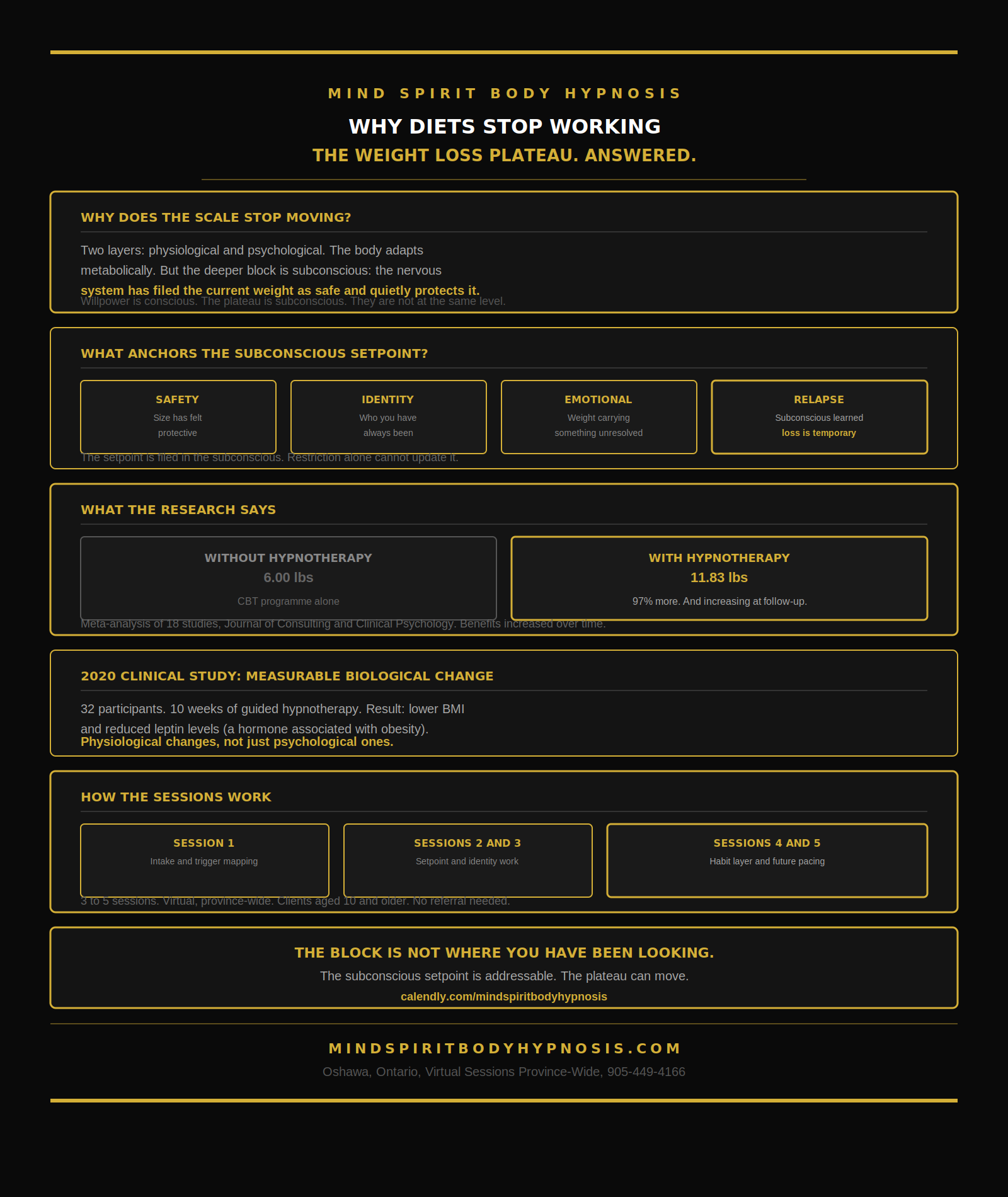
The subconscious maintains something researchers sometimes call a weight setpoint: a weight range the nervous system has filed as normal, safe, and expected. Reaching that setpoint is relatively easy. Moving below it activates the subconscious protection system.
Several things can anchor the setpoint at a particular weight.
Safety associations. For some people, particularly those with a history of trauma or unwanted attention, a larger body can feel genuinely safer than a smaller one. The subconscious that has filed size as protection will resist losing it, even when the person consciously wants to.
Identity anchoring. The person who has been a particular size for most of their adult life has a subconscious identity built around that weight. Changing it means changing a fundamental sense of who they are, which the subconscious treats with the same caution as any other identity shift.
Emotional function. Weight can serve as a buffer, a comfort, a physical expression of something the person has not found another way to carry. When the weight has been performing this function for years, the subconscious will protect it.
Relapse patterns. The person who has lost weight multiple times and regained it each time has a subconscious that has learned a specific lesson: weight loss is temporary. The plateau may reflect the subconscious applying that expectation to the current attempt before it has formally failed.
For more on how the anxiety and nervous system activation that often underlies these patterns is addressed through hypnotherapy, the hypnotherapy for anxiety and stress pillar page covers the foundational mechanisms.
What Does the Research Say About Hypnotherapy and Weight Loss?
The evidence is considerably stronger than most people expect, particularly for sustained results
A meta-analysis of 18 studies published in the Journal of Consulting and Clinical Psychology found that participants receiving hypnotherapy alongside a cognitive-behavioural weight loss programme lost an average of 11.83 lbs, compared to 6.00 lbs for the behavioural programme alone. That is 97% more weight lost in the hypnosis group. More significantly, the advantage of hypnosis increased at follow-up assessments, meaning the hypnosis group continued to improve after treatment ended while the non-hypnosis group regressed.
A 2020 study tracking 32 participants in a clinically supervised hypnotherapy programme found that after 10 weeks, participants had a lower BMI and reduced blood levels of leptin, a hormone associated with obesity and appetite regulation. The physiological changes observed suggest hypnotherapy produces measurable biological effects, not just psychological ones.
These findings align with what clients I work with across Ontario consistently report: that the work shifts something at a deeper level than motivation or information. The relationship with food changes. The identity shifts. The weight that had been stuck begins to move, and more importantly, it stays moved.
What Happens in a Weight Loss Hypnotherapy Session at Mind Spirit Body Hypnosis?
Sessions at Mind Spirit Body Hypnosis for weight loss plateau work follow a structured approach that addresses both the habit layer and the identity layer of the pattern.
A typical programme looks like this:
Session 1: Intake and mapping. A thorough conversation about the specific shape of the plateau for this person. When it started, what has been tried, what emotional patterns are present around food, and what the weight feels like it might be protecting. This map shapes everything that follows.
Sessions 2 and 3: Subconscious setpoint work. The identity-level associations with the current weight are examined and gently updated in trance. The body is helped to experience a lower weight as genuinely safe rather than threatening. The emotional function the weight has been serving is addressed directly.
Sessions 4 and 5: Habit layer and future pacing. The specific eating patterns, triggers, and emotional regulation habits that have been maintaining the plateau are addressed. I walk you through future situations at a lower weight, filing the new identity as expected experience rather than unfamiliar territory.
For more on how the emotional eating patterns that often accompany weight loss plateaus are addressed, the weight loss and emotional eating pillar page covers the full approach.
In my practice, weight loss plateau work typically runs between three and five sessions for the subconscious layer, with progress assessed at each session. All sessions are virtual, available across Ontario, and open to clients aged 10 and older. No referral is required. More about my approach and credentials is available on the about page.

Frequently Asked Questions
Why do I stop losing weight even when I am eating well and exercising? A weight loss plateau often has two layers: physiological and psychological. The body adapts metabolically to caloric restriction, but for many people the deeper block is subconscious. The nervous system has filed the current weight as normal and safe, and it quietly works against conscious effort to change it. This subconscious layer is what hypnotherapy addresses directly.
Is a weight loss plateau a willpower problem? No. Willpower operates at the conscious level, and a weight loss plateau is typically a subconscious problem. The conscious mind can commit to a plan, count every calorie, and exercise consistently, and the plateau can persist because the subconscious has not updated its expectations. Blaming willpower is both inaccurate and unhelpful.
What does the subconscious have to do with my weight? The subconscious maintains something researchers call a weight setpoint: a weight range it treats as normal and safe. Several things can anchor this setpoint above a desired weight, including safety associations, identity anchoring, the emotional function the weight is serving, and learned relapse patterns from previous attempts. Hypnotherapy works directly with these subconscious anchors.
Does hypnotherapy actually work for weight loss? The research is detailed. A meta-analysis of 18 studies found that adding hypnotherapy to a behavioural weight loss programme produced 97% more weight loss than the programme alone (11.83 lbs vs 6.00 lbs), and the advantage of hypnosis increased over time rather than fading. A 2020 clinical study also found measurable reductions in BMI and leptin levels after 10 weeks of guided hypnotherapy.
Is hypnotherapy a replacement for diet and exercise? No. Hypnotherapy works best as part of a comprehensive approach alongside sensible nutrition and movement. What it does is address the subconscious barriers that make it difficult to sustain a consistent diet and exercise: the emotional triggers, the identity-level resistance, and the habit loops that pull a person back into old patterns.
What if I have already lost weight and regained it multiple times? This history is important information, not a disqualifier. Multiple loss-regain cycles often mean the subconscious has learned a specific pattern: that weight loss is temporary. This learned expectation is one of the things addressed directly in trance. The subconscious is helped to update its prediction and to experience sustained change as possible rather than historically improbable.
How many sessions will I need? In my practice, weight-loss plateau work typically runs for three to five sessions to address the subconscious layer of the work. An honest, specific estimate for your situation is always given in the free 30-minute strategy session, with no commitment required.
Can children and teenagers be helped with weight-related patterns? Yes. I work with clients aged 10 and older. Body image and eating patterns often establish early, and addressing them before they become deeply entrenched tends to produce faster, more durable results.
Can I access sessions from anywhere in Ontario? Yes. All sessions at Mind Spirit Body Hypnosis are delivered virtually across the province. Clients from Durham Region, Toronto, Ottawa, and across Ontario are welcome. No referral is required.
How is this different from a medically supervised weight loss programme? Hypnotherapy is a complementary approach, not a medical one. It does not prescribe medication, provide dietary advice, or replace your doctor. What it does is address the subconscious psychological patterns that make medically or nutritionally sound advice difficult to sustain. Many clients find hypnotherapy most effective when used alongside, not instead of, other forms of support.
Ready to Take the Next Step?
If you have been doing everything right and the scale has not moved, the block is probably not where you have been looking for it.
I offer a free 30-minute virtual strategy session for new clients across Ontario. There is no pressure. Just a conversation about what you have tried, what has not worked, and whether hypnotherapy might be the missing piece.
Book your free session: calendly.com/mindspiritbodyhypnosis
Call or text: 905-449-4166
Email: mindspiritbodyhypnosis@gmail.com
Visit: mindspiritbodyhypnosis.com
Serving clients virtually across Ontario, including Durham Region, Toronto, Canada, and beyond.
Disclaimer: This article is for informational purposes only and does not constitute medical or psychological advice. Hypnotherapy, NLP, and EMDR are complementary approaches and are not a substitute for diagnosis or treatment by a qualified healthcare provider. Please consult a licensed professional if you have concerns about your mental or physical health.
Written by Fanis Makrigiannis | Certified Hypnotherapist and NLP Master Practitioner | Mind Spirit Body Hypnosis.