Does Hypnotherapy really stop panic attacks?
Hypnotherapy for Panic Attacks in Ontario: Stop the Cycle at the Root
TL;DR: Panic attacks are not random, not dangerous, and not a sign that something is fundamentally wrong with you. They are a subconscious alarm system that has become miscalibrated, and hypnotherapy works directly with the subconscious to recalibrate it. At Mind Spirit Body Hypnosis in Oshawa, Ontario, hypnotherapy and NLP help clients of all ages across the province break the panic cycle, reduce the frequency and intensity of attacks, and rebuild a felt sense of safety in their own body. Who it helps: anyone aged 10 and older in Ontario experiencing panic attacks, panic disorder, anticipatory anxiety, or agoraphobia linked to panic. Book a free 30-minute virtual session at calendly.com/mindspiritbodyhypnosis.
Quick Answer
A panic attack is a sudden surge of intense fear or discomfort accompanied by physical symptoms including a racing heart, shortness of breath, dizziness, tingling, and a sense of impending doom. Panic attacks are driven by the subconscious nervous system, not by actual danger, and they respond exceptionally well to hypnotherapy because hypnotherapy works directly at the subconscious level where the alarm is being triggered. At Mind Spirit Body Hypnosis in Durham Region, virtual sessions combining hypnotherapy and NLP are available across Ontario for clients of all ages ready to stop being controlled by panic.
In This Article:
What Is a Panic Attack and What Causes It?
It can happen anywhere. In a supermarket. On a highway. At your desk. In the middle of the night, pulling you out of sleep. One moment everything is normal, and the next your heart is pounding, your chest is tight, your vision is narrowing, and every signal your body is sending says that something is catastrophically wrong.
That is a panic attack. And approximately two million Canadians live with some form of panic disorder, according to the Public Health Agency of Canada. Many more experience isolated panic attacks without meeting the full clinical criteria for the disorder but still find them significantly disruptive to daily life.
A panic attack is defined in the DSM-5 as an abrupt surge of intense fear or discomfort that reaches a peak within minutes, accompanied by at least four of thirteen possible physical and psychological symptoms including palpitations, sweating, trembling, shortness of breath, chest pain, nausea, dizziness, chills or hot flushes, numbness or tingling, derealisation, fear of losing control, or fear of dying (American Psychiatric Association, 2013).
What causes them? At the neurological level, panic attacks are produced by the amygdala, the brain's threat detection centre, firing a false alarm. The amygdala has concluded, based on a subconscious association or a pattern of accumulated stress, that the current situation is dangerous. It activates the fight-or-flight response at full intensity even though there is no actual threat. The body does exactly what it is designed to do in the face of danger. The problem is that there is no danger.
Common contributing factors include:
Chronic stress or burnout that has lowered the nervous system's threshold
A sensitizing event: one frightening experience of physical symptoms that the subconscious then begins monitoring for
Underlying anxiety patterns that have accumulated over time
A history of trauma that has left the nervous system in a persistent state of hyperarousal
Significant life transitions that activate deep subconscious fears about safety and control
Panic Attacks vs. Anxiety Attacks: An Important Distinction
These two terms are frequently used interchangeably, but they describe different experiences.
Anxiety attacks build gradually in response to a perceived stressor. There is usually an identifiable trigger, and the symptoms, while distressing, tend to escalate over time rather than arriving suddenly. The person is often aware of what is causing the anxiety.
Panic attacks arrive abruptly and at full intensity, often with no identifiable external trigger. They peak within minutes and then subside, leaving the person shaken, exhausted, and frequently frightened about when the next one will occur. This anticipatory anxiety about future panic attacks is itself one of the most disabling aspects of panic disorder.
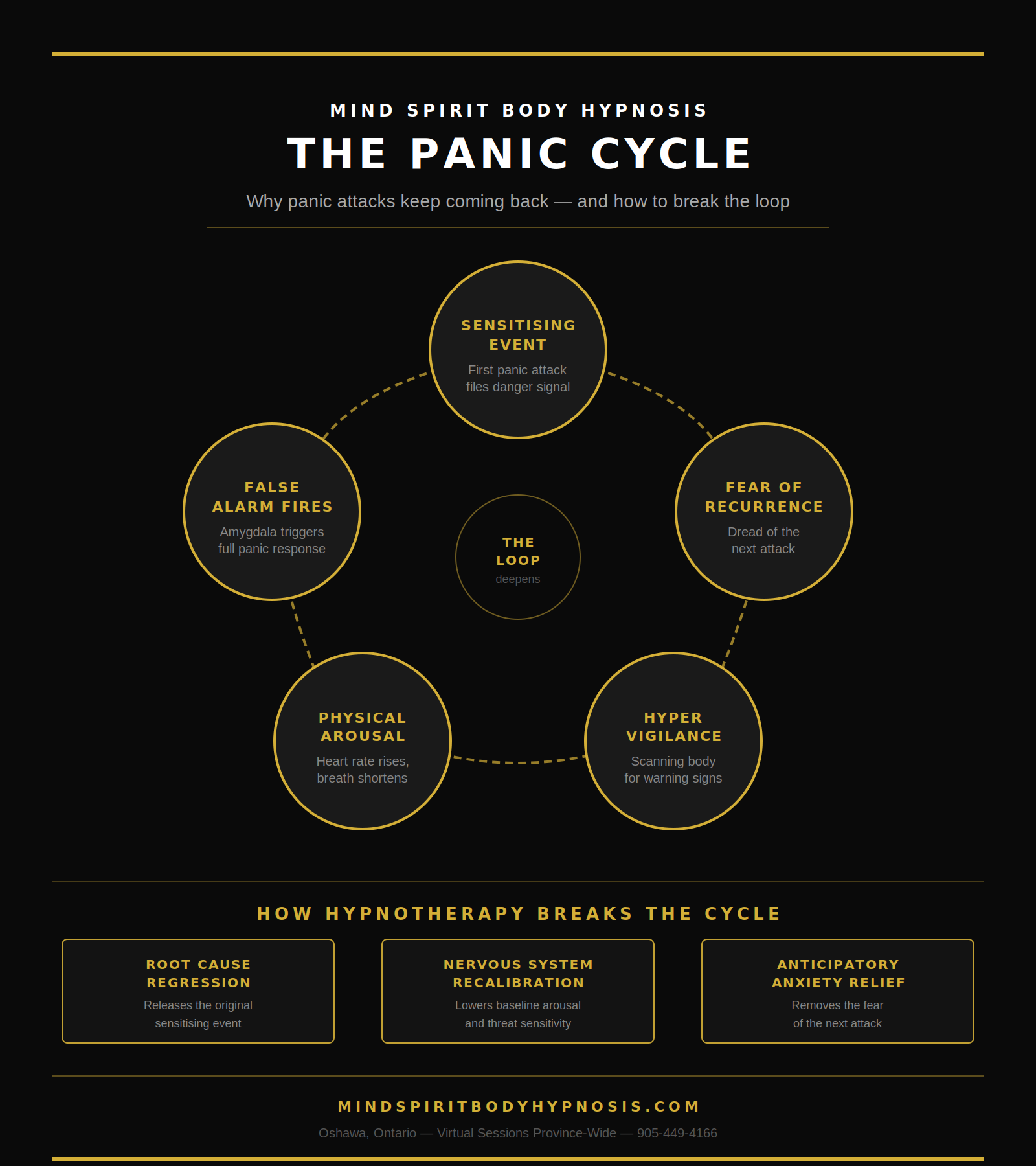
The anticipatory anxiety creates a self-reinforcing loop. The person becomes hypervigilant to any physical sensation that might signal an oncoming attack. Heart beats a little faster? Panic. Breathing feels slightly different? Panic. The monitoring itself activates arousal, which produces sensations, which the subconscious interprets as threat, which triggers more arousal. This loop is entirely driven by the subconscious and is exactly where hypnotherapy intervenes.

Why Panic Attacks Feel So Terrifying
Part of what makes panic attacks so distressing is the physical intensity of the experience. Every symptom of a panic attack- the pounding heart, the struggle to breathe, the tingling in the hands, the sense of unreality- is produced by the adrenaline surge of the fight-or-flight response. These are not imagined. They are completely real physical sensations produced by real neurochemical activity.
The terror is compounded by the fact that these symptoms closely mimic those of genuine medical emergencies. Many people experiencing their first panic attack believe they are having a heart attack or stroke and present to hospital emergency departments as a result. This is extremely common and entirely understandable.
What makes panic attacks manageable once understood is that the physical sensations, however frightening, are not dangerous. They are adrenaline. They will pass. No one has ever been harmed by a panic attack itself. The harm comes from the avoidance, the restriction of life, and the accumulated anxiety about future attacks that panic disorder produces over time.
Hypnotherapy addresses both the physical pattern and the anticipatory anxiety simultaneously, working with the subconscious to recalibrate the alarm system rather than simply managing its output.
For more on how chronic anxiety and nervous system dysregulation create the conditions for panic, the hypnotherapy for anxiety and stress pillar page at Mind Spirit Body Hypnosis covers the foundational mechanisms in detail.
How Hypnotherapy Stops Panic at the Subconscious Root
A meta-analysis published in the International Journal of Clinical and Experimental Hypnosis reviewing seventeen clinical trials found that the average person treated with hypnosis reduced anxiety more than 79 percent of those in control groups, with that figure rising to 84 percent at long-term follow-up (Valentine et al., 2019). Panic disorder, as an anxiety-spectrum condition, sits squarely within this evidence base.
At Mind Spirit Body Hypnosis, panic attack sessions follow a structured, multi-layered approach:
Nervous system recalibration. The hypnotic trance state itself is a powerful intervention for the chronically dysregulated nervous system. Deep trance activates the parasympathetic nervous system, reduces cortisol and adrenaline, and begins to lower the baseline arousal level that makes panic attacks more likely. Many clients notice a reduction in background anxiety from the first session.
Sensitizing event work. Most panic disorder presentations can be traced to a first panic attack or sensitizing event: the original frightening physical experience that the subconscious then began scanning for. Regression work revisits that event, releases the emotional charge attached to it, and updates the subconscious record so it stops treating the body's normal physical sensations as evidence of threat.
Hypervigilance interruption. The monitoring pattern, the constant scanning of body sensations for signs of an oncoming attack, is itself a subconscious programme. Hypnotherapy and NLP work together to interrupt this programme, training the subconscious to interpret neutral physical sensations accurately rather than catastrophically.
Anticipatory anxiety reduction. The fear of the next panic attack is often more disabling than the attacks themselves. Direct suggestion work addresses the anticipatory anxiety specifically, replacing the expectation of panic with an expectation of calm and a genuine sense that the body is safe.
Agoraphobia and avoidance reversal. When panic disorder has led to significant avoidance of situations or places, systematic desensitization in trance gradually reintroduces those situations in a safe, relaxed context, allowing the subconscious to update its associations without the person needing to face the feared situation at full intensity before they are ready.
NLP Techniques That Interrupt the Panic Cycle
NLP offers precise, fast-acting tools for dismantling the internal structure of the panic cycle. At Mind Spirit Body Hypnosis, these are integrated into every session alongside hypnotherapy.
Submodality work on the panic experience. The internal representation of an oncoming panic attack has a specific structure: a mental image with particular qualities, a physical sensation with a specific location and intensity, a voice with a particular tone. Submodality work changes that structure, making the internal experience of threat smaller, more distant, and less compelling. The alarm becomes quieter.
The panic interrupt anchor. A deeply calm, grounded, safe state experienced in trance is anchored to a physical cue. When the client notices the early signals of an oncoming panic attack, activating the anchor shifts the nervous system rapidly toward calm, interrupting the escalation before it peaks. This gives the client an immediate, portable tool for real-world use between sessions.
Reframing physical sensations. A core driver of panic disorder is the catastrophic interpretation of normal physical sensations. NLP reframing techniques work at the subconscious level to change the meaning attached to these sensations, so that a slightly elevated heart rate is experienced as normal physical arousal rather than as the onset of a medical emergency.
Parts integration. Many panic disorder clients have an internal conflict between the part that wants to feel safe and engage with life, and the protective part that triggers panic to keep the person away from anything that feels remotely uncertain or dangerous. NLP parts integration aligns these, resolving the internal conflict that sustains the disorder.
For more on how NLP and hypnotherapy are combined at Mind Spirit Body Hypnosis, the about page covers the full clinical approach and qualifications in detail.
What to Expect in a Session
The first session begins with a careful conversation. When did the panic attacks start? What do they typically feel like? Are there identifiable triggers, or do they arrive unexpectedly? Has avoidance developed? What does life look like when panic is running things?
This mapping shapes the subconscious work that follows. The induction is gentle, and most clients enter a deeply relaxed trance state within minutes. For many panic clients, this is one of the first times they have felt genuinely calm in their body in a long time. The subconscious work then addresses the specific patterns identified in the conversation.
Most panic attack programs at Mind Spirit Body Hypnosis run between four and six sessions. Early sessions focus on nervous system recalibration and sensitizing event work. Later sessions address anticipatory anxiety, avoidance patterns, and install the NLP tools the client will use independently between sessions and after the program is complete.
All sessions are delivered virtually, available to clients of all ages across Ontario from the comfort and safety of their own home. For full details on the virtual session process, visit the virtual hypnotherapy Ontario page.
What My Clients Say
"I began seeing Fanis after suffering from severe anxiety and panic attacks. I've been on a really tough journey for the past year, with a lot of personal trauma on top of existing anxiety. My quality of life was suffering significantly. After just a few sessions with Fanis, I noticed a significant improvement in my anxiety levels, and I am having far fewer panic attacks. Fanis is very warm and professional, and I would highly recommend him to anyone struggling with anxiety and panic."
Verified Client | Anxiety and Panic Attacks | Five Stars
FAQ
Can hypnotherapy stop panic attacks? Yes. Hypnotherapy works directly with the subconscious nervous system patterns driving panic attacks, producing significant reductions in frequency and intensity. Research supports hypnotic intervention as an effective approach for anxiety-spectrum conditions including panic disorder, with improvements maintained at long-term follow-up.
What causes panic attacks? Panic attacks are caused by the amygdala, the brain's threat detection centre, firing a false alarm. This is typically driven by chronic stress that has lowered the nervous system's threshold, a sensitizing event that created a subconscious association between certain sensations and danger, or an underlying anxiety pattern that has accumulated over time.
What is the difference between a panic attack and an anxiety attack? Anxiety attacks build gradually in response to an identifiable stressor. Panic attacks arrive abruptly and at full intensity, often with no identifiable external trigger, peak within minutes, and are followed by anticipatory anxiety about future attacks. Both respond well to hypnotherapy and NLP.
Why do panic attacks happen for no reason? Panic attacks feel like they happen for no reason because the trigger is subconscious rather than conscious. The subconscious has associated certain internal sensations, situations, or accumulated stress levels with danger, and it activates the full alarm response without the conscious mind understanding why.
What is the best therapy for panic attacks? Research supports cognitive behavioural therapy (CBT) and hypnotherapy as among the most effective approaches for panic disorder. Hypnotherapy is particularly effective because it works at the subconscious level where the panic alarm is actually triggered, rather than addressing the conscious thoughts that follow. At Mind Spirit Body Hypnosis, hypnotherapy and NLP are combined for a comprehensive result.
Does NLP help with panic disorder? Yes. NLP techniques including submodality work, anchoring, reframing, and parts integration are particularly effective for interrupting the panic cycle, reducing anticipatory anxiety, and giving the client portable tools for managing early signals of an oncoming attack.
How many sessions will I need? Most clients at Mind Spirit Body Hypnosis working on panic attacks complete four to six sessions. The timeline depends on the duration and severity of the panic disorder, the degree of avoidance that has developed, and whether there are underlying trauma or anxiety components.
Is hypnotherapy suitable for younger clients with panic attacks? Yes. Mind Spirit Body Hypnosis works with clients aged 10 and older. Panic attacks in adolescents and younger clients respond well to hypnotherapy and NLP, which are gentle, non-invasive, and medication-free approaches.
Can I do virtual sessions from anywhere in Ontario? Yes. All sessions are delivered virtually, province-wide, with no referral required. The virtual format is particularly well suited to panic disorder clients who may have developed avoidance of travelling or being in unfamiliar environments.
How do I get started? Book a free 30-minute virtual strategy session at calendly.com/mindspiritbodyhypnosis. No referral needed. The first conversation is simply a chance to talk through what is happening and whether hypnotherapy is the right fit.
Book Your Free Consultation
If panic attacks have been making your world smaller, keeping you away from places you used to go, things you used to do, and a version of yourself that felt safe, you do not have to stay there.
At Mind Spirit Body Hypnosis in Oshawa, Ontario, virtual hypnotherapy and NLP sessions are available across the province for clients aged 10 and older, helping people of all ages break the panic cycle at the subconscious root.
Book your free 30-minute virtual strategy session:
Phone: 905-449-4166
Website: mindspiritbodyhypnosis.com
Disclaimer: Hypnotherapy and NLP are complementary approaches and are not a substitute for medical or psychiatric care. If you believe you are experiencing a medical emergency, including symptoms of a heart attack, please call 911 immediately. If you are experiencing a mental health crisis, please contact a qualified healthcare provider. Results vary by individual.
Written by Fanis Makrigiannis | Certified Hypnotherapist & NLP Master Practitioner | Mind Spirit Body Hypnosis