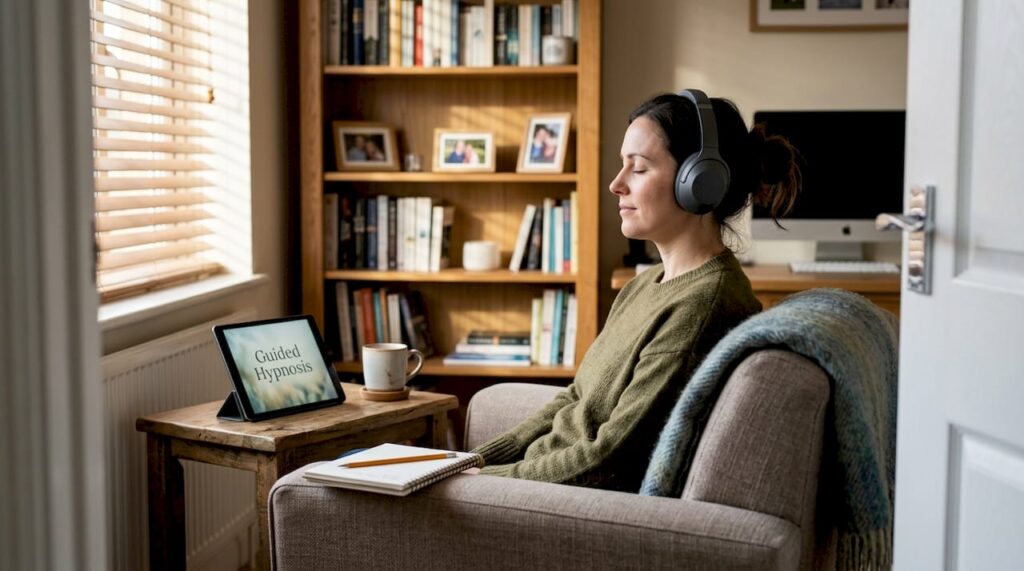
How hypnosis affects the brain and improves well-being
Hypnosis isn’t mind control, and it isn’t magic. It’s a measurable neurological state that modern brain imaging can track in real time. Most people carry a pop-culture version of hypnosis in their heads, shaped by stage shows and films, and that version has almost nothing to do with what actually happens inside the brain. Theta and alpha brainwaves increase during hypnosis, and key brain networks shift in ways that support deep focus, reduced self-criticism, and genuine therapeutic change. This article walks through the neuroscience, explains why some people respond more strongly than others, and connects those findings to practical outcomes for stress, anxiety, pain, and personal growth.
How hypnosis affects the brain and improves well-being
Table of Contents
- Setting the scientific stage: What actually happens during hypnosis
- Brain networks and hypnosis: Focused attention, suggestibility, and therapeutic effects
- Individual differences: Why some brains respond more than others
- From relaxation to therapy: How hypnosis modulates stress, pain, and memory
- Our take: What most people miss about the science of hypnosis
- Ready to experience the benefits of hypnosis?
- Frequently asked questions
Key Takeaways
| Point | Details |
|---|---|
| Hypnosis changes brainwaves | Hypnosis reliably increases theta and alpha brainwave activity, leading to relaxation and focus. |
| Brain networks shape outcomes. | Large-scale brain network changes explain why hypnosis supports pain and anxiety relief. |
| Not everyone responds the same. | Individual differences in brain structure influence how well people respond to hypnosis. |
| Therapeutic use is evidence-based | Science supports hypnosis for stress and pain relief, but warns against using it for memory recovery. |
Setting the scientific stage: What actually happens during hypnosis
Most people assume hypnosis is simply deep relaxation, like a nap with suggestions layered on top. Neuroscience tells a more interesting story. When a trained practitioner guides someone into a hypnotic state, the brain doesn’t just slow down. It reorganizes.
Researchers use electroencephalography (EEG) to measure electrical activity across the brain. EEG records brainwaves in distinct frequency bands: delta, theta, alpha, beta, and gamma. Each band reflects a different mental state. During ordinary waking life, beta waves dominate. During hypnosis, the picture changes significantly. Brain imaging research on hypnosis consistently shows a rise in theta and alpha activity, the frequencies associated with relaxed alertness, creative thinking, and reduced internal chatter.
One of the most important changes involves the default mode network (DMN). The DMN is the brain’s background noise system. It runs when you’re not focused on a task, generating the mental wandering, self-referential thoughts, and worry loops that many people find exhausting. During hypnosis, DMN activity drops. This isn’t the same as what happens during ordinary relaxation or even meditation, where the DMN quiets gradually through sustained practice.
Hypnosis produces a targeted shift. Focused attention increases while the inner critic goes quiet. That combination is what makes hypnosis distinctly different from simply lying down and breathing slowly.
| Brainwave type Frequency Associated state Change | Change during hypnosis | ||
|---|---|---|---|
| Beta | 13–30 Hz | Active thinking, alertness | Decreases |
| Alpha | 8–12 Hz | Relaxed focus, calm awareness | Increases |
| Theta | 4–7 Hz | Deep relaxation, creativity | Increases |
| Delta | 0.5–3 Hz | Deep sleep | Minimal change |
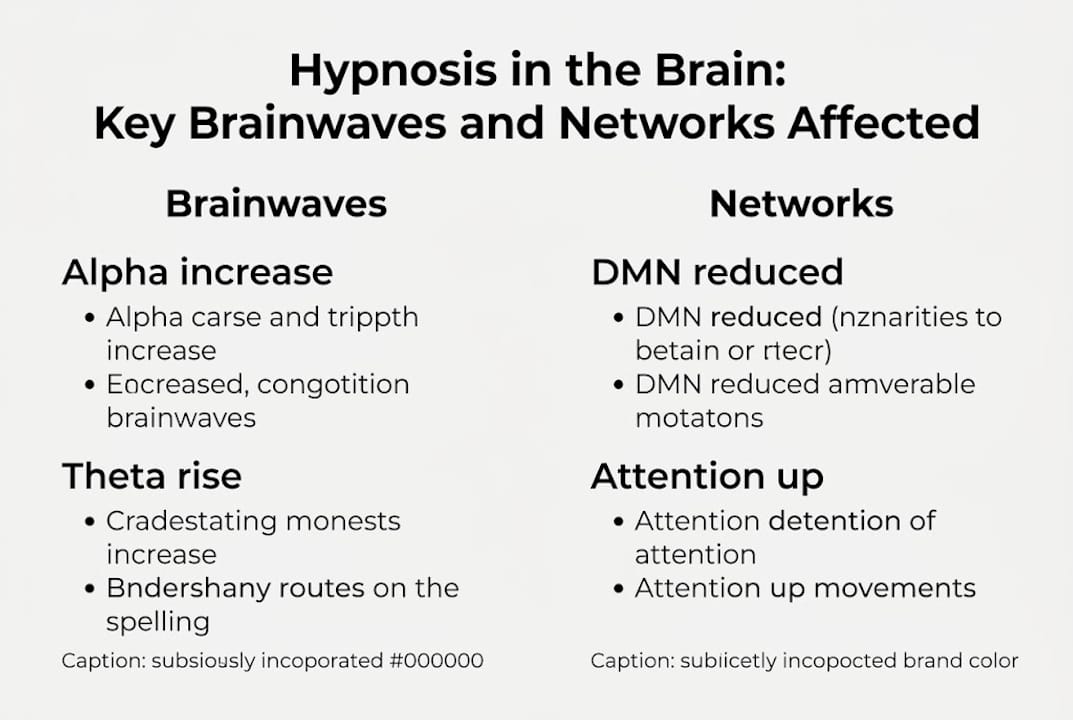
These shifts matter because they create the neurological conditions for suggestion to land more deeply. The clinical uses of hypnosis span everything from pain management to anxiety reduction, and the brainwave data helps explain why those outcomes are possible. When the brain is in a theta-dominant state, it becomes more receptive to new associations and less defended against change.
This is not a placebo effect dressed up in scientific language. It is a measurable, reproducible shift in how the brain organizes its activity.
Brain networks and hypnosis: Focused attention, suggestibility, and therapeutic effects
Brainwave changes are just one layer of the story. To understand why hypnosis works therapeutically, you need to look at the large-scale brain networks involved.
Three networks are particularly relevant: the default mode network (DMN), the salience network, and the executive control network. The DMN handles self-referential thought. The salience network decides what deserves your attention. The executive control network manages goal-directed behaviour and decision-making. Under hypnosis, large-scale brain networks shift in a way that reduces salience network activity and DMN involvement while keeping executive processes engaged enough to follow suggestions.
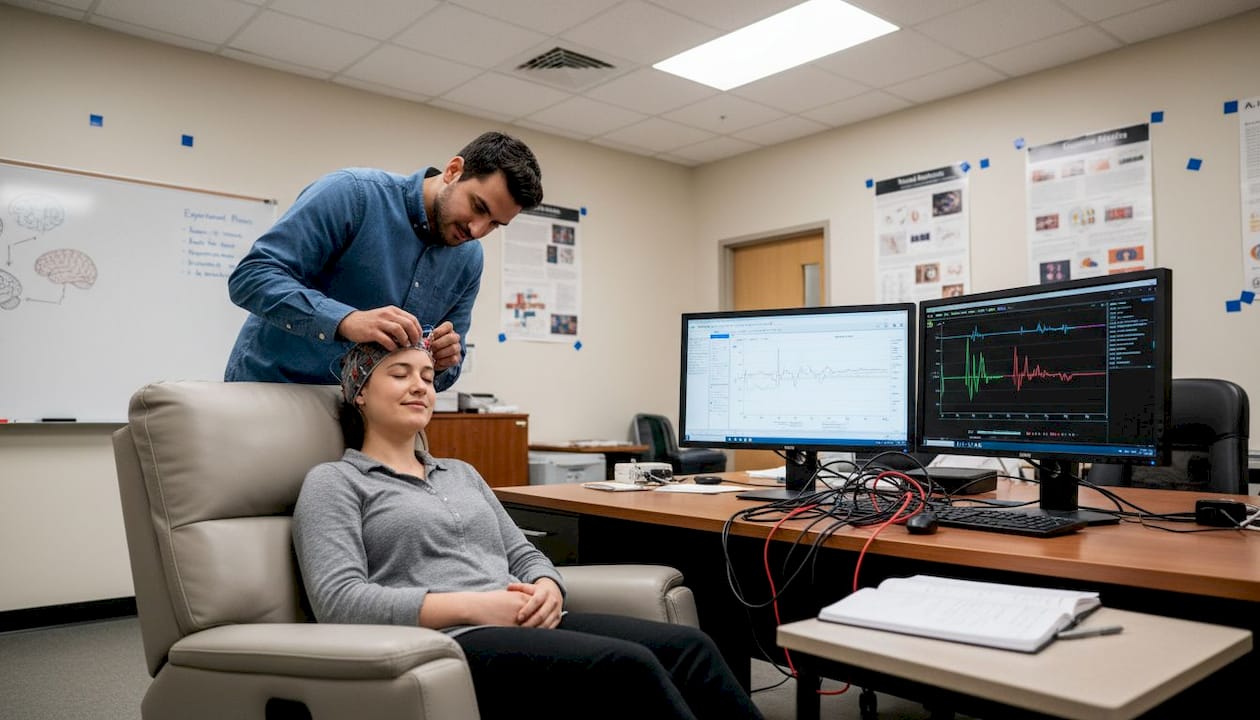
This is why hypnosis feels focused rather than foggy. You’re not unconscious. You’re in a state where the brain’s filtering systems are temporarily recalibrated, making it easier to accept new perspectives and bypass habitual resistance.
| State | DMN activity, Alpha | Alpha/theta waves, Focused attention, Suggestibility | ty | |
|---|---|---|---|---|
| Relaxation | Slightly reduced | Moderate increase | Low | Low |
| Meditation | Reduced with practice | Moderate increase | Moderate | Low |
| Hypnosis | Significantly reduced | Strong increase | High | High |
The therapeutic applications of hypnosis linked to these network changes include a range of well-documented outcomes:
- Reduction in acute and chronic pain
- Decreased anxiety and stress reactivity
- Improved sleep quality
- Greater emotional regulation
- Enhanced ability to form new habits
- Reduced symptoms of post-traumatic stress
Using hypnosis for anxiety is particularly well-supported because the network changes directly address the hypervigilance and rumination that drive anxious states. When the salience network quiets and the DMN stops feeding worry loops, the nervous system gets a genuine break.
Pro Tip: Your mental state before a session matters more than most people realize. Arriving rushed or skeptical doesn’t prevent hypnosis from working, but arriving with genuine curiosity and a willingness to follow guidance significantly improves your responsiveness. Even five minutes of slow breathing beforehand can shift your baseline brainwave activity in a helpful direction.
Individual differences: Why some brains respond more than others
Knowing what networks are engaged, it’s natural to ask: why do experiences with hypnosis vary so widely?
The answer lies in hypnotic susceptibility, sometimes called hypnotizability. This is not a character flaw or a sign of weakness. It reflects genuine differences in how brains are wired. Individual hypnotizability correlates with baseline brain structure and function, meaning some people are neurologically predisposed to enter hypnotic states more easily.
Research into pain and hypnosis adds another layer. High susceptibility links to anticipatory activity in the dorsolateral prefrontal cortex (DLPFC) and altered connectivity in pain-processing areas, which helps explain why highly hypnotizable individuals can experience dramatic pain relief that others don’t.
Characteristics associated with high hypnotizability include:
- Strong capacity for absorbed, focused attention
- Vivid imagination and ease with mental imagery
- Openness to new experiences
- Ability to suspend critical judgment temporarily
- Tendency toward immersive experiences (reading, music, film)
Characteristics associated with lower hypnotizability include:
- Strong analytical or skeptical thinking style
- Difficulty visualizing or imagining scenarios
- High need for control in unfamiliar situations
- Tendency to monitor internal states closely
Lower hypnotizability doesn’t mean hypnosis is useless. It means the approach needs to be adapted. Skilled practitioners adjust their techniques based on where a client sits on the susceptibility spectrum. Personal development with hypnosis can still yield meaningful results for people with moderate or lower susceptibility, particularly when the work focuses on stress reduction, habit change, and cognitive reframing rather than dramatic suggestion-based outcomes.
The genetics of hypnotizability is an active area of research, with some studies pointing to specific gene variants that influence dopamine regulation and attentional control as potential contributors.
From relaxation to therapy: How hypnosis modulates stress, pain, and memory
With individual responsiveness in mind, it’s time to bring these changes back to their real-world impacts on wellbeing.
Hypnosis affects the autonomic nervous system (ANS), the system that governs your body’s stress and recovery responses. Specifically, hypnosis reduces sympathetic activity and increases parasympathetic tone. In plain terms, it shifts the body from fight-or-flight toward rest-and-repair. Heart rate slows. Cortisol drops. Muscle tension eases.
Here’s how a typical hypnotic session moves through the body and brain:
- Induction: Focused attention narrows, beta waves decrease, and alpha waves rise.
- Deepening: Theta waves increase, DMN activity reduces, and the salience network quiets.
- Suggestion phase: Executive networks remain engaged; new associations are introduced with reduced resistance.
- Integration: The nervous system consolidates changes; parasympathetic tone increases.
- Emergence: Normal waking state returns, often with a sense of calm and mental clarity.
A single hypnosis session has been shown to improve executive performance with an effect size of 0.62 and reduce stress biomarkers in medical students, which is a meaningful result from one session. For chronic pain, hypnotherapy session benefits are well-established, though the degree of relief varies with susceptibility.
Memory is where caution is warranted. Hypnosis can increase confidence in recalled memories without necessarily increasing their accuracy. Regression techniques, which involve revisiting past experiences under hypnosis, carry a real risk of generating false memories. This doesn’t invalidate regression work entirely, but it does mean it should be conducted carefully, with a practitioner who understands the risks and works within ethical guidelines.
Pro Tip: To get the most from hypnotherapy, be clear about your goal before the session. Vague intentions produce vague results. Whether you’re targeting stress, a specific fear, or a performance block, naming it precisely helps the practitioner tailor the approach and helps your brain orient toward the right kind of change.
Our take: What most people miss about the science of hypnosis
The science of hypnosis has moved well beyond the fringes. Brain imaging, EEG data, and clinical trials have built a credible evidence base. Yet the conversation in popular culture still swings between two extremes: either hypnosis is pure theatre, or it’s a miracle cure that can fix anything in one session. Neither view is accurate, and both cause real harm.
The harm from dismissal is obvious. People who could benefit from a safe, non-pharmaceutical tool for stress or anxiety never try it. The harm from overhyping is subtler but just as serious. When practitioners promise too much, clients arrive with unrealistic expectations, and when those aren’t met, they conclude hypnosis doesn’t work rather than recognizing that the approach wasn’t right for them.
What the evidence actually supports is this: hypnosis is a powerful tool for stress and anxiety reduction through ANS modulation, and it can meaningfully improve cognitive performance in the right contexts. It is not a shortcut to recovering accurate memories, and it is not equally effective for everyone.
In Canada, acceptance of hypnotherapy as a legitimate complementary therapy is growing, particularly among people who want evidence-based alternatives to medication. That’s a healthy shift. But it works best when clients approach it with realistic expectations and work with practitioners who have genuine hypnotherapy expertise and a thorough understanding of both the possibilities and the limits.
Ready to experience the benefits of hypnosis?
If neuroscience has you curious about what hypnosis could do for your own stress, anxiety, or personal growth, the next step is straightforward. Evidence-based hypnotherapy doesn’t require you to be in a room with someone. Sessions are available online, making professional support accessible wherever you are in Canada.
At Mind Spirit Body Hypnosis, every session is personalized and grounded in current clinical understanding. There’s no scripted approach, no one-size-fits-all programme. Whether you’re dealing with chronic stress, anxiety, pain, or a habit you can’t seem to shift, the work is tailored to how your brain actually responds. Book an online hypnotherapy session and take a concrete step toward the kind of change that lasts.
Frequently asked questions
Does hypnosis really change your brain activity?
Yes. Theta and alpha waves increase during hypnosis, and key brain networks linked to focus and relaxation shift measurably from their normal waking patterns.
Can everyone be hypnotized equally well?
No. Hypnotizability varies based on baseline brain structure and function, meaning some people naturally enter hypnotic states more easily than others, though most can benefit with the right approach.
Is hypnosis safe for managing stress and anxiety?
For most people, yes. Hypnosis safely supports stress and anxiety reduction by shifting the autonomic nervous system toward a parasympathetic state, which calms the body’s stress response without medication.
Are there risks to using hypnosis for memory work?
Yes. False memory formation is a documented risk in regression techniques, where hypnosis is used to revisit past experiences. This type of work should only be undertaken with a qualified, ethically grounded practitioner.

Recommended:
Breaking Bad Habits with Hypnosis
Hypnotherapy for Anxiety Relief
What is Clinical Hypnotherapy?
About the author: Award-winning Fanis Makrigiannis of Mind Spirit Body Hypnosis Services is a certified Hypnotherapist and Master Practitioner of Neuro-linguistic Programming with the American Board of Hypnotherapy. Proudly serving Durham Region, The Greater Toronto Area, Peel Region, Ontario, Canada, and the United States of America via Zoom meetings.