Hypnotherapy for insomnia in Ontario
Hypnotherapy for Insomnia in Ontario: Sleep Deeply Without Medication
TL;DR: Insomnia is one of the most common and most undertreated sleep disorders in Canada, and sleeping pills address the symptom without ever touching the root. At Mind Spirit Body Hypnosis in Oshawa, Ontario, hypnotherapy works directly with the subconscious patterns keeping your nervous system alert at night, helping adults across the province fall asleep faster, stay asleep longer, and wake up actually rested. Who it helps: adults 25 to 55 in Ontario dealing with chronic insomnia, racing thoughts at bedtime, early waking, or long-term reliance on sleep medication. Book a free 30-minute virtual session at calendly.com/mindspiritbodyhypnosis.
Quick Answer
Insomnia is a chronic difficulty falling asleep, staying asleep, or achieving restorative sleep, and it affects an estimated 40 percent of Canadian adults. Hypnotherapy for insomnia in Ontario works by accessing the subconscious mind to release the hyperarousal patterns, anxiety loops, and conditioned wakefulness keeping the nervous system switched on at night. At Mind Spirit Body Hypnosis in Durham Region, virtual sessions are available province-wide for adults ready to sleep without relying on medication.
In This Article:
What Is Insomnia and How Common Is It in Ontario?
What Actually Causes Chronic Insomnia?
Why Sleeping Pills Are Not a Long-Term Solution
How Hypnotherapy Treats Insomnia at the Root
NLP Techniques That Quiet the Nighttime Mind
What to Expect in a Session
What My Clients Say
FAQ
Book Your Free Consultation
What Is Insomnia and How Common Is It in Ontario?
You lie down exhausted. The room is dark and quiet. Everything is in place for sleep. And then your mind switches on.
The list of things you did not finish today. The conversation that went sideways last week. The vague, source-less worry that something is wrong and you cannot quite name it. The clock. The math of how many hours you have left if you fall asleep right now. The frustration that you still are not asleep.
This is insomnia. And it is not a character flaw, a sign of weakness, or something that will fix itself if you just relax more.
Insomnia is a clinical condition involving persistent difficulty falling asleep, staying asleep, or experiencing restorative sleep, despite adequate opportunity for rest. According to Statistics Canada, approximately 40 percent of Canadian adults report some degree of insomnia symptoms, with around 13 percent meeting the criteria for a clinical insomnia disorder (Chaput et al., 2023). In Ontario, that translates to millions of adults navigating their days on inadequate sleep, with real consequences for mood, cognition, physical health, and quality of life.
The standard response to insomnia in the Canadian healthcare system remains primarily pharmacological. Sleeping pills are prescribed widely, despite guidelines from Health Canada and the Canadian Sleep Society recommending cognitive and behavioural approaches as first-line treatment for chronic insomnia. Hypnotherapy is one of the most evidence-supported non-pharmacological approaches available, and it remains significantly underused.
What Actually Causes Chronic Insomnia?
Most people with chronic insomnia assume the problem is their brain. They think they are just wired to sleep badly. But insomnia is rarely a brain defect. It is almost always a learned pattern, driven and maintained by the subconscious.
Chronic insomnia typically begins with a trigger. A period of high stress, a health scare, a relationship breakdown, a job change. Sleep becomes difficult during that period, which is entirely normal. The problem is what happens next.
The subconscious mind begins to associate the bedroom, bedtime, and the act of trying to sleep with alertness, frustration, and failure. Sleep becomes a performance. The harder the person tries, the more the nervous system activates. The wakefulness deepens. The association between bed and wakefulness becomes more entrenched. And a self-reinforcing cycle is established that continues long after the original stressor has passed.
This is why chronic insomnia persists even when the person's life circumstances improve. The trigger is gone, but the subconscious pattern remains, running the same program every night.
Additional drivers of chronic insomnia include:
Chronic anxiety or a hyperactive stress response
Unprocessed emotional material that surfaces when the distractions of the day fall away
Perfectionist or high-achieving thought patterns that do not have an off switch
Early experiences that made nighttime feel unsafe
Long-term sleep medication use that has disrupted the natural sleep architecture
All of these drivers are subconscious patterns. And the subconscious is exactly where hypnotherapy works.

Why Sleeping Pills Are Not a Long-Term Solution
Sleeping pills work by suppressing the central nervous system to induce unconsciousness. They do not produce natural sleep. They do not address the hyperarousal, the anxiety loops, or the conditioned wakefulness that are causing the insomnia. And they carry well-documented risks with long-term use, including dependence, tolerance, cognitive impairment, and rebound insomnia when discontinued.
A 2025 report from Global News highlighted a growing movement among Canadian sleep specialists calling for a shift away from pharmacological first-line treatment for insomnia toward behavioural and psychological approaches. The report noted that sleeping pill prescriptions in Canada remain among the highest in the developed world despite evidence that non-pharmacological approaches produce more durable results.
Hypnotherapy is one of those approaches. A systematic review published in the Journal of Clinical Sleep Medicine found that hypnotic interventions significantly improved sleep onset latency, total sleep time, and sleep quality compared to control conditions, with effects that were maintained at follow-up (Chamine et al., 2018). Research also shows that in highly hypnotically responsive individuals, hypnotic suggestion can increase slow-wave deep sleep by up to 81 percent as measured by EEG.
Unlike sleeping pills, hypnotherapy addresses the mechanism behind the insomnia rather than suppressing it. The subconscious learns to associate sleep with safety and ease rather than performance and failure. The nervous system learns to downregulate at night. And the changes persist after the sessions are complete.
For more on how the nervous system drives sleep disruption and how subconscious work addresses it, the hypnotherapy for sleep and insomnia pillar page at Mind Spirit Body Hypnosis covers the full clinical picture.
How Hypnotherapy Treats Insomnia at the Root
At Mind Spirit Body Hypnosis, insomnia sessions are structured around the specific mechanisms driving each client's sleep difficulty. The approach is not generic relaxation. It is targeted subconscious intervention.
Hyperarousal reduction. The hypnotic trance state is itself a powerful nervous system intervention. Research consistently shows that hypnosis activates the parasympathetic nervous system, reduces cortisol, and shifts brainwave activity toward the theta and delta frequencies associated with deep sleep. For clients stuck in chronic sympathetic overdrive at night, even the first session can produce a measurable shift in how the body approaches rest.
Conditioned wakefulness reversal. Through guided imagery and suggestion delivered in trance, the subconscious association between bed and wakefulness is systematically replaced with a new association between bed and ease, safety, and natural sleep onset. This is the core of what makes hypnotherapy more durable than sleeping pills for chronic insomnia.
Root cause work. When insomnia is linked to an identifiable triggering event, regression work revisits that event, releases the emotional charge attached to it, and updates the subconscious record so the nighttime alert response is no longer justified.
Racing thoughts interruption. A common driver of sleep onset insomnia is the inability to disengage from analytical thinking at bedtime. NLP techniques and direct suggestion work are used to install a reliable mental transition from the active day-mind to the receptive sleep-mind, giving the client a process they can use independently every night.
Future pacing. The subconscious is walked through vivid, sensory scenes of the person sleeping deeply and waking rested, across multiple future nights. This files the new sleep pattern as expected memory, making it the brain's default rather than an aspirational goal.
NLP Techniques That Quiet the Nighttime Mind
NLP offers practical, fast-acting tools for the specific thought patterns and nervous system states that drive insomnia. At Mind Spirit Body Hypnosis, these are integrated into every session.
Submodality work on worry loops. The internal experience of nighttime worry has a structure: a particular quality of internal voice, a specific visual representation, a location in the body. Submodality work changes that structure, making the worry loop quieter, more distant, and less compelling so it loses its ability to sustain wakefulness.
Anchoring a sleep state. A deeply relaxed, drowsy state experienced during trance is anchored to a physical cue such as a specific hand position or breath pattern. The client can activate this anchor independently at bedtime to reliably shift the nervous system toward sleep readiness.
Parts integration. Many insomnia sufferers have an internal conflict between the part that wants to sleep and the part that feels it needs to stay alert. This is particularly common in high achievers and people with anxiety. NLP parts integration resolves the conflict so the two parts are working together rather than at odds every night.
Timeline work. When insomnia is anchored to a specific period in the past, timeline work allows the subconscious to revisit, reframe, and release it so the nighttime nervous system stops referencing an old threat that no longer exists.
For context on how anxiety and chronic stress feed into sleep disruption, the article on hypnotherapy for anxiety and stress in Ontario covers the overlapping patterns in detail.
What to Expect in a Session
The first session begins with a thorough conversation. How long has the insomnia been present? Does the difficulty lie in falling asleep, staying asleep, or both? What is happening in the mind at bedtime? Is there a history of anxiety, trauma, or a specific triggering event? Have sleeping pills been used, and if so, for how long?
This shapes the intervention before the trance begins. From there, the induction guides you into a deeply relaxed state. Most insomnia clients report that the first session is the most relaxed they have felt in months, and many notice an improvement in sleep quality that same night.
Subsequent sessions build on the initial work, reinforcing new subconscious associations, installing NLP tools for independent use, and addressing any deeper patterns that emerge.
Most insomnia programs at Mind Spirit Body Hypnosis run between three and six sessions depending on the complexity and duration of the pattern. All sessions are delivered virtually, available to adults across Ontario from the comfort of their own home.
The virtual hypnotherapy Ontario page covers everything you need to know about the process before booking.
What my clients say:
Mehedi H.
★★★★★
“I smoked for over 15 years. I had tried patches, gum, willpower, and nothing stuck for more than a few weeks. I have not had a cigarette since my third session. That was over two months ago. What surprised me most was how quickly the craving lost its grip. It did not feel like white-knuckling it. It just felt different in my head, like the urge lost its voice. Fanis explained what he was doing every step of the way and never made me feel judged. If you are ready to stop and you want something that actually works, book a session with Fanis. I wish I had done this years ago.”
FAQ
Can hypnotherapy really fix insomnia? Research supports hypnotherapy as an effective non-pharmacological treatment for insomnia, with studies showing improvements in sleep onset, total sleep time, and sleep quality. It addresses the subconscious drivers of insomnia rather than suppressing the symptom with medication.
What is the best therapy for chronic insomnia? Canadian sleep specialists increasingly recommend cognitive and behavioural approaches as first-line treatment for chronic insomnia. Hypnotherapy is one of the most evidence-supported of these approaches, producing durable results by addressing the hyperarousal and conditioned wakefulness at the root of the condition.
Why do I wake up at 3 am every night? Waking in the early hours is often linked to a cortisol surge associated with chronic stress or anxiety. The subconscious is responding to a perceived threat, even in the absence of any conscious worry. Hypnotherapy works with the subconscious to reduce the nighttime stress response that triggers early waking.
Is hypnosis better than sleeping pills for insomnia? For chronic insomnia, the evidence suggests that non-pharmacological approaches, including hypnotherapy, produce more durable results than sleeping pills, which address the symptom without touching the root cause and carry risks of dependence and rebound insomnia.
How many sessions will I need? Most clients at Mind Spirit Body Hypnosis working on insomnia complete three to six sessions. Simpler presentations with a clear triggering event often resolve faster. Complex chronic insomnia with anxiety or trauma components may take longer.
Can hypnotherapy stop racing thoughts at bedtime? Yes. Racing thoughts at bedtime are a subconscious pattern, not a fixed brain state. Hypnotherapy and NLP techniques work directly with the thought loops and nervous system hyperarousal that drive bedtime mental activity.
Do I need to be highly hypnotizable for it to work? No. While highly hypnotizable individuals tend to show the strongest physiological responses to hypnotic suggestion, research shows meaningful sleep improvements across a wide range of hypnotic responsiveness levels.
Can I do virtual sessions from anywhere in Ontario? Yes. All sessions at Mind Spirit Body Hypnosis are delivered virtually, province-wide, with no referral required. The virtual format is particularly well suited to insomnia work because you can go straight to bed after the session if you choose.
Will I need to keep doing sessions forever? No. The goal of hypnotherapy for insomnia is to install new subconscious patterns that operate independently. Most clients find that the changes become self-sustaining after completing their program.
How do I get started? Book a free 30-minute virtual strategy session at calendly.com/mindspiritbodyhypnosis. No referral needed. The first conversation is simply a chance to discuss what is happening and whether hypnotherapy is the right fit.
Book Your Free Consultation
If you have been lying awake night after night, counting hours, trying to force sleep, and waking up exhausted regardless of what time you got into bed, this is not something you have to keep managing alone.
At Mind Spirit Body Hypnosis in Oshawa, Ontario, virtual hypnotherapy sessions are available across the province, helping adults rewire the subconscious patterns keeping them awake at night.
Book your free 30-minute virtual strategy session:
Phone: 905-449-4166
Website: mindspiritbodyhypnosis.com
Disclaimer: Hypnotherapy and NLP are complementary approaches and are not a substitute for medical or psychiatric care. Insomnia can be a symptom of underlying medical conditions. If you are experiencing persistent sleep difficulties, please consult a qualified healthcare provider. If you are currently taking sleep medication, do not discontinue without medical supervision. Results vary by individual.
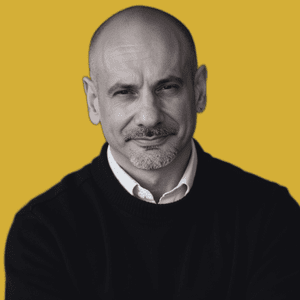
Written by Fanis Makrigiannis | Certified Hypnotherapist & NLP Master Practitioner | Mind Spirit Body Hypnosis