Hypnosis for the fear of needles
Fear of Needles Hypnotherapy in Ontario: Overcome Trypanophobia for Good •
TL;DR: A fear of needles is one of the most common phobias in adults, and it can have serious consequences for your health: missed vaccinations, avoided blood tests, delayed medical care. At Mind Spirit Body Hypnosis in Oshawa, Ontario, hypnotherapy and NLP work directly with the subconscious root of trypanophobia to help adults across the province face needles calmly and comfortably. Who it helps: adults 25--55 in Ontario who avoid medical procedures, blood tests, or vaccinations because of needle fear. Book a free 30-minute virtual session at calendly.com/mindspiritbodyhypnosis.
Quick Answer
Trypanophobia is an intense, subconscious fear of needles and medical procedures involving injections, affecting an estimated one in four adults. Hypnotherapy in Ontario addresses trypanophobia by accessing the root cause of the fear, typically a past traumatic or painful experience and releasing the emotional charge attached to it so the subconscious stops treating needles as a threat. At Mind Spirit Body Hypnosis in Durham Region, virtual sessions combining hypnotherapy and NLP are available province-wide for adults ready to stop letting needle fear control their healthcare.
In This Article:
What Is Trypanophobia and How Common Is It?
What Causes a Fear of Needles?
How Needle Fear Affects Your Health
How Hypnotherapy Treats Trypanophobia at the Root
NLP Techniques That Dissolve Needle Fear Fast
What to Expect in a Session
What My Clients Say
FAQ
Book Your Free Consultation
What Is Trypanophobia and How Common Is It?
Most people feel some degree of discomfort around needles. That is entirely normal. But for an estimated one in four adults, the reaction goes far beyond discomfort. It becomes a full fear response: heart racing, palms sweating, vision narrowing, legs turning to water triggered by the sight of a syringe, the thought of a blood test, or even just walking into a medical clinic.
That is trypanophobia. And it is far more common in adults than most people realize or admit.
Trypanophobia is classified as a specific phobia under the blood-injection-injury (BII) category in the DSM-5. What makes it distinct from other phobias is a physiological component unique to BII phobias: a two-phase cardiovascular response in which the heart rate and blood pressure first spike with anxiety, then drop sharply, which is why some people faint when confronted with a needle even if they are not particularly anxious in other areas of life (Öst, 1992).
Research published in the Journal of Anxiety Disorders estimates that needle fear affects between 20 and 50 percent of young adults, with roughly 10 percent of the general adult population meeting the clinical threshold for trypanophobia (McLenon & Rogers, 2019). In Ontario alone, that represents hundreds of thousands of adults quietly avoiding the medical care they need.
What Causes a Fear of Needles?
Needle fear almost always has a root cause: a specific experience or pattern of experiences that the subconscious mind has filed as evidence that needles are dangerous.
The most common origins include:
A painful or traumatic early experience. Many adults with trypanophobia can trace it to a specific childhood injection one that was administered forcibly, unexpectedly, or that hurt more than they were prepared for. The subconscious filed that event as a threat and has been running the fear response on autopilot ever since.
Learned fear from a parent or caregiver. Children are highly attuned to the emotional responses of the adults around them. Growing up watching a parent react to needles with fear or avoidance is often enough for the subconscious to adopt the same response as its own.
Medical trauma. A history of difficult medical procedures, hospitalizations, or invasive treatments involving needles can create a broader association between medical settings and danger that extends to needles specifically.
Loss of control. For some people, the fear is less about the needle itself and more about the experience of being held still, having something done to their body without the ability to stop it. This is particularly common in adults with a history of trauma.
Whatever the origin, the pattern is the same: the subconscious has learned to treat needles as a threat, and it responds accordingly automatically, instantly, and with full physiological force every time the trigger appears. Hypnotherapy goes directly to that subconscious record and changes it.
How Needle Fear Affects Your Health
Trypanophobia is not just an inconvenience. For many adults, it has real and serious consequences for physical health.
Common health impacts include:
Avoiding or delaying routine blood tests, meaning conditions go undetected
Refusing or deferring vaccinations, including flu shots and other preventive care
Avoiding dental procedures that require local anesthetic injections
Delaying surgery or medical treatment requiring IV access
Skipping cancer screening or other diagnostic procedures involving needles
In diabetics, difficulty managing insulin injections
Canada's public health infrastructure relies significantly on vaccination uptake, and needle fear is one of the most commonly cited reasons for vaccine hesitancy in adults. According to the Public Health Agency of Canada, improving access and reducing fear-based barriers to vaccination is a key public health priority (PHAC, 2022).
Addressing trypanophobia is not just about personal comfort. It is about being able to access the healthcare you need and deserve. For more on how phobias develop and how hypnotherapy addresses them at the root, the hypnotherapy for fears and phobias pillar page at Mind Spirit Body Hypnosis covers the full clinical picture.
How Hypnotherapy Treats Trypanophobia at the Root
Trypanophobia responds exceptionally well to hypnotherapy because it is, at its core, a subconscious pattern a learned fear response that the conscious mind cannot override simply by deciding to be less afraid.
At Mind Spirit Body Hypnosis, needle phobia sessions follow a structured approach built around the specific mechanisms of BII phobias:
Root cause regression. The session identifies and revisits the original experience that created the fear. In trance, the emotional charge attached to that memory is released, and the subconscious receives an updated interpretation -- one that accurately reflects that needles in a medical context are safe, brief, and manageable. Once the root is cleared, the automatic fear response loses its trigger.
Fast phobia cure (NLP). One of the most powerful and rapid techniques available for specific phobias, the NLP fast phobia cure uses a dissociation process to allow the person to reprocess the fear-triggering memory from a safe, detached perspective. Research supports its effectiveness for specific phobias, with many clients experiencing a significant reduction in fear response after a single application (Bandler & Grinder, 1979).
Systematic desensitization in trance. Working within the relaxed hypnotic state, the person is gently and progressively exposed to the idea of needles, beginning with a distant, abstract image and moving gradually toward a fully imagined, calm experience of a routine injection. This retrains the nervous system to associate needles with calm rather than threat.
Anchoring a calm response. A deeply relaxed, resourceful state is anchored to a physical cue a simple pressure point or hand position that the client can activate in the moment before and during any medical procedure. This gives the person an immediate, portable tool they can use independently.

NLP Techniques That Dissolve Needle Fear Fast
NLP offers precise, fast-acting tools for dismantling the subconscious architecture of specific phobias. At Mind Spirit Body Hypnosis, these are integrated into sessions for maximum effect.
Submodality work. The internal representation of the feared needle -- the mental image, its size, colour, proximity, and the feeling it produces in the body has a structure. Submodality work changes that structure. When the internal image of the needle is made smaller, more distant, less vivid, and drained of colour, the fear response it generates diminishes proportionally.
Perceptual positions. Needle fear often involves being trapped inside a first-person, fully associated experience of the fear right up close, inside the feeling, with no perspective. Shifting perceptual positions moves the person to a detached, third-person view, allowing the subconscious to process the experience without the full physiological charge.
Timeline work. Moving back along the internal timeline to locate, reframe, and release the original needle experience at its root. Once the original event is updated, all the subsequent fear responses built on top of it begin to dissolve.
For a broader look at how anxiety and fear responses are held in the nervous system and what changes when subconscious work is applied, the article on hypnotherapy for anxiety in Ontario covers the neurological foundations in accessible terms.
What to Expect in a Session
The first session begins with a conversation. When did the fear start? What specifically triggers it: the sight of a needle, the anticipation of an injection, being in a medical clinic? Does it affect your ability to access healthcare? What would change in your life if it were gone?
From there, the induction guides you into a deeply relaxed trance state. Most clients with needle phobia are surprised by how calm they feel within the first few minutes of the induction. The subconscious work follows, using whichever combination of regression, fast phobia cure, desensitization, and NLP is most relevant to your specific presentation.
Needle phobia is typically one of the faster presentations to resolve. Many clients notice a significant shift after just two or three sessions. Some require only one, particularly when the fear traces to a single clear root cause.
All sessions at Mind Spirit Body Hypnosis are delivered virtually, available to adults across Ontario from the comfort of their own home. This is especially practical for needle phobia; there is no clinical environment, no waiting room anxiety, and no accidental exposure to medical equipment before you are ready.
The virtual hypnotherapy Ontario page covers everything you need to know about how the process works before booking.
What my clients say:
"Fanis is an amazing Hypnotherapist! We did a virtual session, and I was highly impressed with his skills, knowledge, intuition and calm presence. His voice is very comforting yet strong. He was very thorough in addressing my needs and helping me become aware of the deeper thought patterns I needed to acknowledge, which in turn boosted my confidence and determination toward my goals. Highly recommend his services! I really enjoyed working with him. You will too!"
— Angie R.
FAQ
Can hypnotherapy cure a fear of needles? Hypnotherapy cannot guarantee a complete cure for anyone, but it produces significant and often rapid reductions in needle fear by addressing the subconscious root of the phobia. Many clients reach the point where they can attend medical appointments calmly and comfortably after two to three sessions.
What is trypanophobia? Trypanophobia is the clinical term for an intense fear of needles and medical procedures involving injections. It is classified as a specific phobia under the blood-injection-injury category and affects an estimated one in four adults to some degree.
Why do I faint when I see a needle? Fainting in response to needles is caused by a two-phase cardiovascular response unique to blood-injection-injury phobias. The initial anxiety spike is followed by a sharp drop in heart rate and blood pressure, which causes loss of consciousness. Hypnotherapy addresses the subconscious fear driving this response.
Is needle fear a real phobia? Yes. Trypanophobia is a formally recognized specific phobia with a physiological component. It is not simply squeamishness or weakness, and it deserves proper therapeutic support.
How many sessions does it take? Needle phobia typically resolves faster than more complex phobias. Most clients at Mind Spirit Body Hypnosis see significant improvement in two to three sessions. Some require only one, depending on the clarity of the root cause.
What is the best therapy for fear of needles? Research and clinical experience both support hypnotherapy and NLP as highly effective approaches for needle phobia specifically. The combination of root cause regression, fast phobia cure, and systematic desensitization in trance addresses the fear at multiple levels simultaneously.
Can I do sessions virtually if I am afraid of medical settings? Yes, and virtual delivery is particularly well suited to needle phobia for exactly this reason. There is no clinical environment, no medical equipment, and no unexpected triggers. You work from your own home in a space you control.
Does NLP help with needle fear? Yes. NLP techniques including the fast phobia cure, submodality work, and timeline regression are particularly effective for specific phobias and often produce rapid results.
What if my fear has been there since childhood? Many needle phobias do originate in childhood. This does not make them harder to treat; in fact, childhood-origin phobias often respond particularly well to regression work because the root cause is usually a single identifiable event.
How do I book? Book a free 30-minute virtual strategy session at calendly.com/mindspiritbodyhypnosis. No referral needed.
Book Your Free Consultation
Missing blood tests, skipping vaccinations, or dreading medical appointments is not something you have to keep managing alone.
At Mind Spirit Body Hypnosis in Oshawa, Ontario, virtual hypnotherapy and NLP sessions are available across the province, helping adults dissolve needle fear at the subconscious level so they can access the healthcare they need without dread.
Book your free 30-minute virtual strategy session:
Phone: 905-449-4166
Website: mindspiritbodyhypnosis.com
Disclaimer: Hypnotherapy and NLP are complementary approaches and are not a substitute for medical or psychiatric care. If you are experiencing a medical or mental health emergency, please contact a qualified healthcare provider or call 911. Results vary by individual.
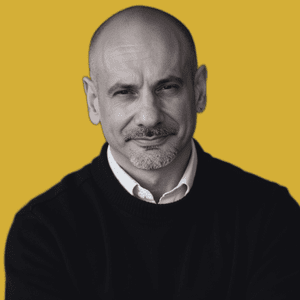
Written by Fanis Makrigiannis | Certified Hypnotherapist & NLP Master Practitioner | Mind Spirit Body Hypnosis